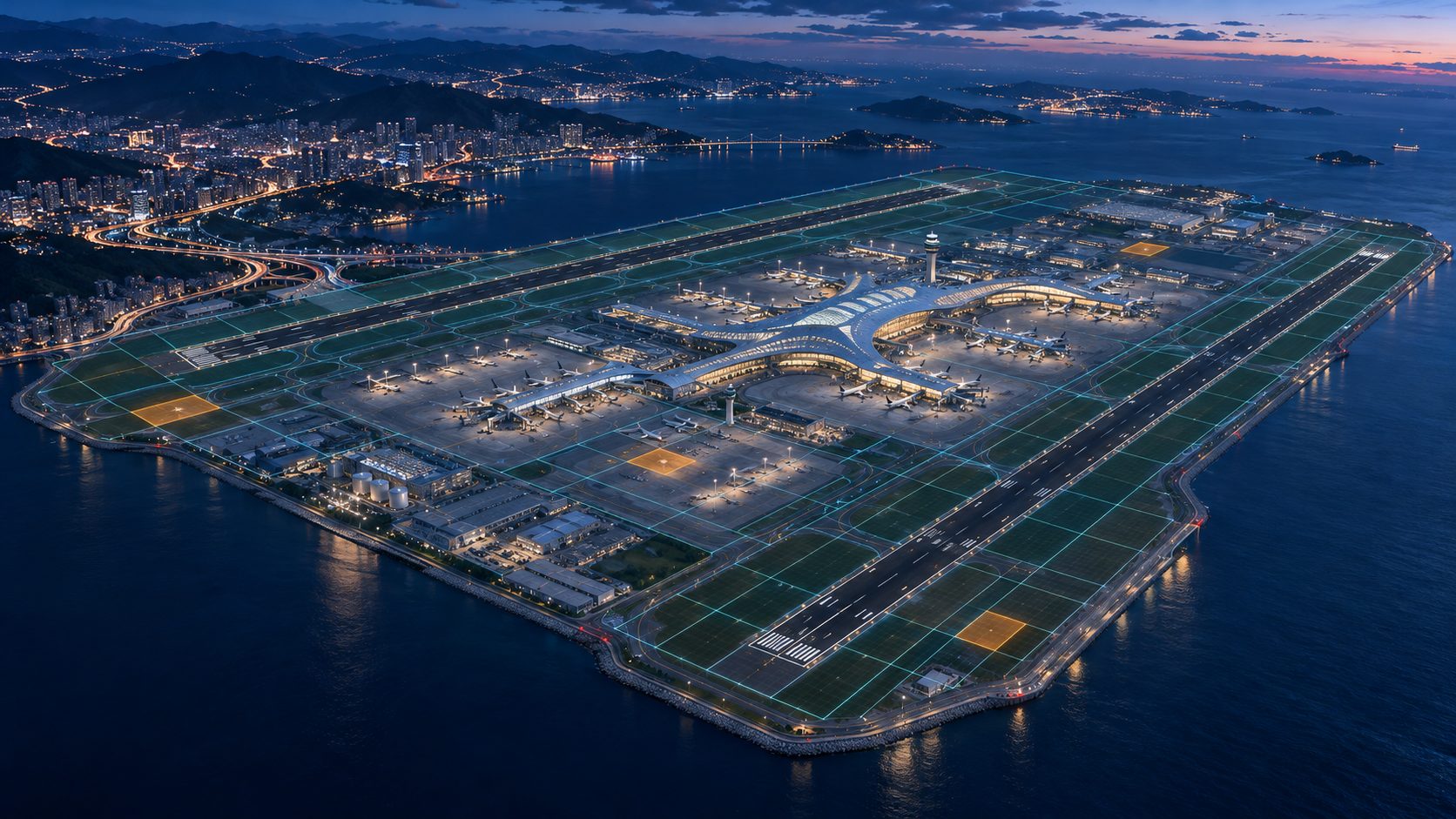
Why point surveys miss ground movement at airports on reclaimed land
Short answer: levelling surveys and ground sensors measure single points very precisely, but an airport covers thousands of hectares. On reclaimed or soft ground, settlement can be uneven, so the place that moves most may sit between survey points. A whole-site satellite screening helps teams decide where to survey first.
Why airport ground settles unevenly
Many coastal airports are built on reclaimed land. Fill material and soft clay compress over time and under load, and the rate changes from place to place. The result is differential settlement: parts of a runway, taxiway or apron sink more than others.
Three ways point checks fall short
- Large site, few checks. Full-site surveys take time and money, so they cannot be repeated often.
- Gaps between points. Change between survey points or sensors can go unnoticed.
- Late detection. Problems found late can lead to cracks, poor drainage and flight delays.
What regular whole-site screening shows
At Incheon International Airport, built on reclaimed land, TOWER analysed 13 satellite observations from January 2023 to July 2026 on a 90 m grid of 4,421 cells. The number of flagged cells ranged from 0 to 43 between observations. One survey would capture only one of those moments. That is why regular checks matter. See the Incheon Airport results.
Screening first, surveys second
Satellite screening does not replace surveys. It points them. TOWER gives teams a short priority list every 12 to 15 days, so surveys go where the ground is changing. Read more about reclaimed and soft-ground airports.
FAQ
Can satellites replace airport ground surveys?
No. Satellites screen the whole airport and suggest where to look. Surveys confirm what is happening in those places.
How often should an airport check its ground?
It depends on the site. At Incheon, results changed a lot between observations, which supports regular checks rather than one-off surveys.